
Dubai's Future: What the 2040 Master Plan and D33 Agenda Mean for Property Investors


Every investor eventually asks the same question: is this growth sustainable, or are we near the top? For Dubai, the honest answer lies in two official government documents that map out the city's direction for the next two decades — worth understanding before you commit capital.
The Dubai 2040 Urban Master Plan: A 20-Year Blueprint
Unlike cities that grow reactively, Dubai plans its urban expansion decades in advance. The Dubai 2040 Urban Master Plan maps out a comprehensive plan for sustainable urban development in Dubai, focused on enhancing people's happiness and quality of life and reinforcing Dubai as a global destination for citizens, residents and visitors over the next 20 years. It's worth noting this isn't Dubai's first such plan — it's the seventh development plan for the emirate since 1960, in a city where between 1960 and 2020, the population multiplied 80 times from 40,000 to 3.3 million.
The plan's core objectives are directly relevant to property investors: it aims to upgrade key urban areas including Downtown, Business Bay, Dubai Marina and Expo 2020 Centre, develop vibrant, healthy and inclusive communities while doubling green and leisure areas, and foster greater economic activity to attract foreign investment into new sectors. By 2040, green and recreational spaces will double in size, with nature reserves and rural natural areas constituting 60% of the emirate's total area — a genuinely ambitious environmental commitment for a desert city.
D33: Doubling the Economy by 2033
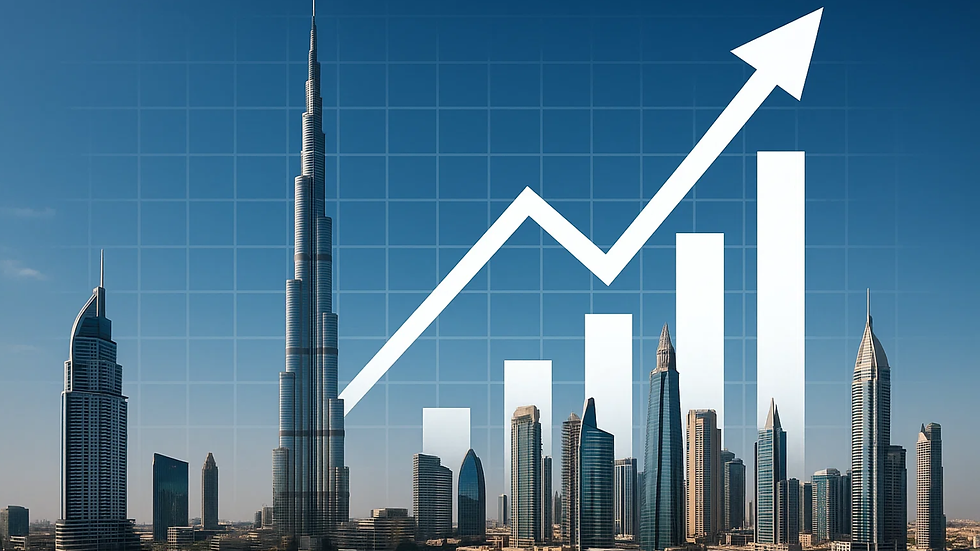
If the 2040 plan is about where Dubai grows, the Dubai Economic Agenda (D33) is about how big it grows. Launched in 2023 by Sheikh Mohammed bin Rashid Al Maktoum, D33 is an ambitious ten-year strategic program with a main objective to double the size of the emirate's economy within a decade, reaching a level of AED 32 trillion in cumulative economic activity. Beyond the headline target, the plan calls for foreign trade to reach AED 25.6 trillion by 2033 by adding 400 cities to the trade map, along with plans to increase foreign direct investment to AED 60 billion per year and integrate 65,000 young citizens into high-growth sectors of the labour market.
For property investors, this matters because economic growth and property demand are directly linked — a doubling economy means a doubling (at minimum) of the professional workforce needing housing, offices and infrastructure to support it.
The Infrastructure Backing These Ambitions
These aren't abstract targets — they're already showing up as committed capital projects. The Al Maktoum International Airport expansion (AED 128 billion, making it the world's largest airport by passenger capacity) directly underpins growth in Dubai South. The upcoming Etihad Rail network is being built with direct connections into major residential masterplans, including Jumeirah Golf Estates. And digital transformation alone is targeted to add AED 100 billion to Dubai's economy annually — a signal of how seriously the city is diversifying beyond real estate and tourism as sole growth drivers.
What This Means for Where You Buy
The 2040 plan explicitly names growth centres and corridors — and it's not a coincidence that our four projects sit within or adjacent to these designated growth zones: Dubai South (airport-anchored), Dubailand (family-wellness corridor), the Dubai–Abu Dhabi corridor via Ghantoot, and established communities like Jumeirah Golf Estates earmarked for further expansion. Buying within a government-designated growth corridor materially reduces the risk that your investment gets left behind as the city's centre of gravity shifts — a real risk in cities without this level of long-term planning.
FAQ: Dubai's Future Growth Plans
What is the Dubai 2040 Urban Master Plan?
A 20-year government blueprint for the emirate's urban development, land use, and infrastructure, launched in March 2021, aiming to double green spaces and support continued population growth.
What is D33 and how does it affect property?
D33 is Dubai's 10-year economic plan aiming to double the size of the economy by 2033, driving continued demand for housing, offices and infrastructure across the emirate.
Is Dubai's growth being driven by government planning or organic demand?
Both — Dubai's government sets long-term infrastructure and economic targets years in advance, which then attracts the private capital and population growth that drives organic property demand.
Does government planning reduce investment risk?
It can — buying within a designated growth corridor (rather than a random location) means your investment benefits from planned infrastructure spending rather than depending purely on market sentiment.
The Williams Frontier View
We deliberately select projects that sit inside Dubai's official growth corridors rather than betting on locations the government hasn't prioritised. When 20-year urban planning and 10-year economic targets both point in the same direction as your investment, that's about as much long-term visibility as any property market in the world can offer.
Want to understand how a specific project aligns with Dubai's growth plans?
Get in touch with our team.


Comments